






Winter work on bonsai: rest, care and preparation for growth
Winter is a time of silence, but also of mindfulness. While the tree rests, you lay the foundation for a healthy growing season. In December, the work shifts from growing to observing, assessing, structuring and protecting. In winter, you lay the basis for what will become visible in spring. Conifers, deciduous trees and azaleas each require their own approach during this period.
Below you’ll find a brief summary of all types of winter work, followed by a more detailed explanation of the possibilities for each type.
Structure check & winter pruning
During the leafless period, you can see the branching more clearly than in any other season. Light corrections are possible now; heavier pruning is best left until spring. It is best to prune maples and beeches only lightly at this stage, as they develop a lot of sap pressure in spring.
This is the time to:
- remove weak or crossing branches;
- reduce excess buds;
- tidy old pruning wounds;
- assess primary and secondary branch structure for balance.
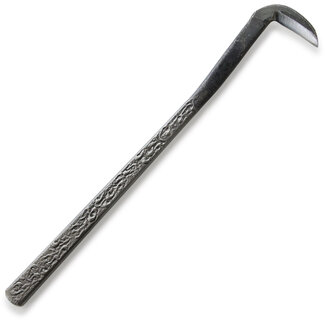
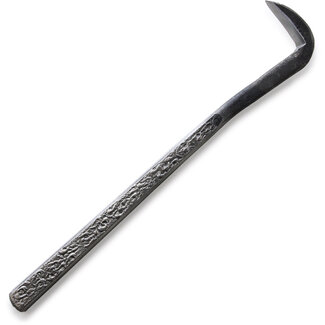
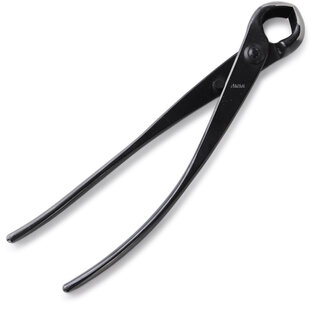
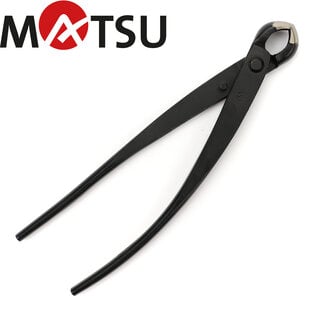
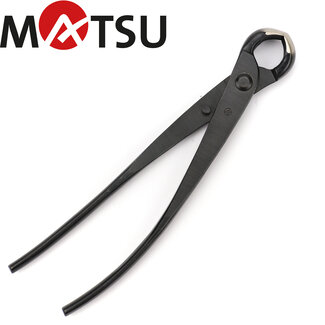
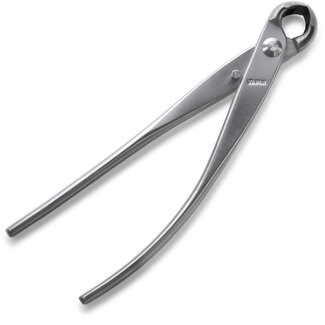
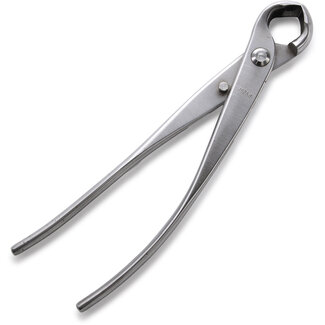
Recommended tools: sharp pruning shears, branch cutters, concave cutters, knob cutters, fine bud scissors.
Best postponed: heavy pruning on species that tend to bleed (such as Acer palmatum), unless strictly necessary.
Wiring & guiding movement
December is an excellent month for wiring branches. The tree is dormant and less susceptible to damage. Branches hold their shape better because the wood is under less sap pressure. Shaping and wiring can be done now; root work is best left until early spring.
- wire grips better when the canopy is not densely in leaf – in winter on deciduous trees and on conifers with thinned needle pads;
- branches are less likely to break under even pressure;
- corrections made now often remain more stable after spring.
Recommended materials: aluminium and/or copper wire, wire cutters, raffia for stronger bends.
Working on dead wood (jin & shari)
In December you can work well on dead wood, provided you are careful with species that retain moisture in soft tissue.
What is possible:
- refine existing jin and shari;
- remove old fibres;
- make minor shape corrections.
What not to do: work deeply or aggressively into the living wood — this is better done in the warmer months, when the tree recovers more quickly.
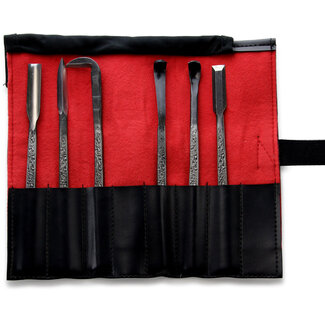
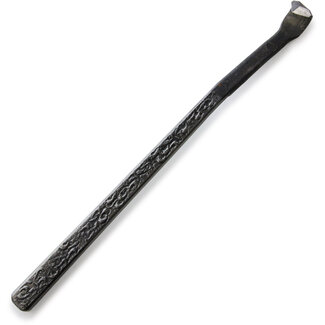
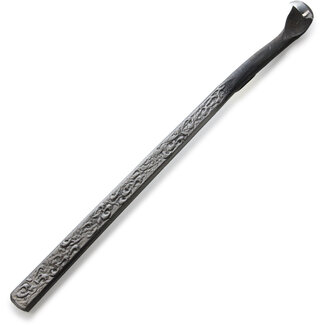
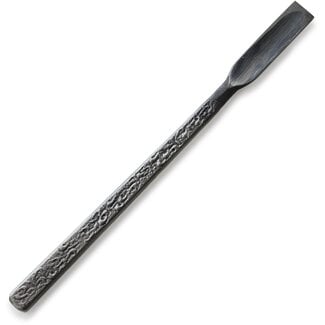
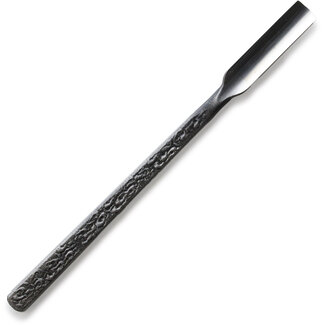
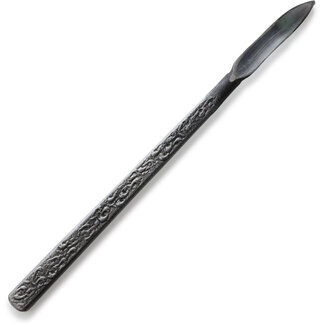
Recommended tools: jin pliers, carving knives, small wooden blocks or light mallets, brushes and, if needed, fine carving tools.
Post-treatment: a light layer of lime sulphur on dry days.
Preparing for repotting
The main repotting season is in February–March, but you can begin the preparation now, so you are ready to start as soon as spring suddenly arrives – and sieving is a wonderfully calm winter task.
- sieve Akadama (for structure);
- mix Kiryu and pumice for conifers;
- select and clean pots;
- have root rakes, spatulas and wire ready.
Watering & feeding
In December, little water is needed, but constant vigilance is essential:
- only water when the top layer of soil is almost dry;
- avoid standing water in pots during periods of frost;
- no feeding in this phase.
Winter protection
Cold is good for trees, but prolonged frost can cause problems, especially with small containers.
- place trees in a sheltered spot during frosty nights;
- use fleece around the pot, not over the tree;
- open the cold greenhouse or cold frame on sunny days for ventilation;
- protect the roots, not the crown: the crown is usually hardier than the contents of the pot.
Recommended equipment: winter fleece, wooden stands, baskets or crates for group protection.
WINTER WORK BY TYPE IN MORE DETAIL
Conifers: shaping in winter
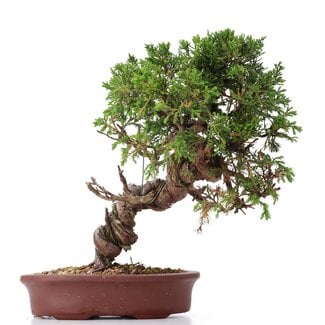
Conifers such as Pinus, Juniperus and Chamaecyparis are ideal for winter work. Wiring and shaping can be done well now, and dead branches can be removed without risk. During this period, sap flow is largely at a standstill, so branches temporarily contain less moisture and tension. This makes the wood slightly less elastic and therefore more able to hold its shape after wiring.
Because needle growth is dormant, the internal branch structure becomes more visible: no new shoots to obstruct the view, but a clear picture of trunk and branching. This makes winter ideal for assessing proportions and defining lines. Dead or unwanted branches can be removed without risk, but heavy pruning is best left until spring. Old wiring can be replaced, but heavy pruning or root work is best left until early spring, once the roots become active again. Note: during severe frost, wood and needles become more brittle and susceptible to damage. Always wait until early spring to repot, just before root activity increases.
Discover the conifers in our collection ›
Deciduous trees at rest: structure visible
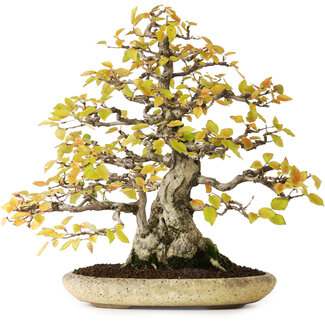
The fact that deciduous trees like Zelkova, Acer and Fagus lose their leaves in winter is not a loss, but an opportunity: because the tree draws its energy back into trunk and roots, the branching opens up completely. The structure, buds and branch angles are now clearly visible – much more than in summer. This makes winter the ideal time to assess trunk and branching critically. With species like Acers and elms, bud development is clearly visible, allowing you to plan which growth should strengthen the crown in spring. Unwanted shoots, crossing branches or water shoots can be removed, as long as these are minor corrections. Avoid heavy pruning: with species like Acer, sap pressure in early spring can lead to bleeding if they are pruned too early or too hard; minor corrections are generally safe. Always postpone repotting until the buds begin to swell, because then the roots will actively grow again and recovery will be optimal.
Discover the non-flowering deciduous trees in our collection ›
Discover the flowering deciduous trees in our collection ›
Discover the fruit-bearing deciduous trees in our collection ›
Azaleas: plans for June blooms
Satsuki azaleas are highly sensitive to timing and do not require any major interventions in winter; light maintenance, such as removing dead twigs, is possible. Sap flow is minimal in winter, so interventions such as hard pruning or repotting would weaken the tree. Repotting too early weakens the roots and can cause flowering to fail. After flowering, in June, is the right time for pruning and repotting. By then, the tree will have built up sufficient energy and can recover safely.
This is also the time to assess the basic structure and balance between trunk and main branches. The distribution of main branches, bud formation and the relationship between root base and trunk are clearly visible during dormancy. Use the winter to study the tree calmly and make plans: how do the main branches run, where are corrections needed, and which branches can be pruned back in June or July? Those who plan ahead will already be paying attention to the potential for bud formation and the distribution of flowering branches – crucial for maintaining rich, colourful flowering and healthy growth later. In this way, you make the most of the dormant period and enter the working phase in spring well prepared.
Discover our Satsuki azaleas ›
Everything for healthy winter work
Discover our carefully selected collection of bonsai, handmade Japanese pots, substrate, wire, tools and care products — everything you need to guide your trees through the winter with knowledge and peace of mind.