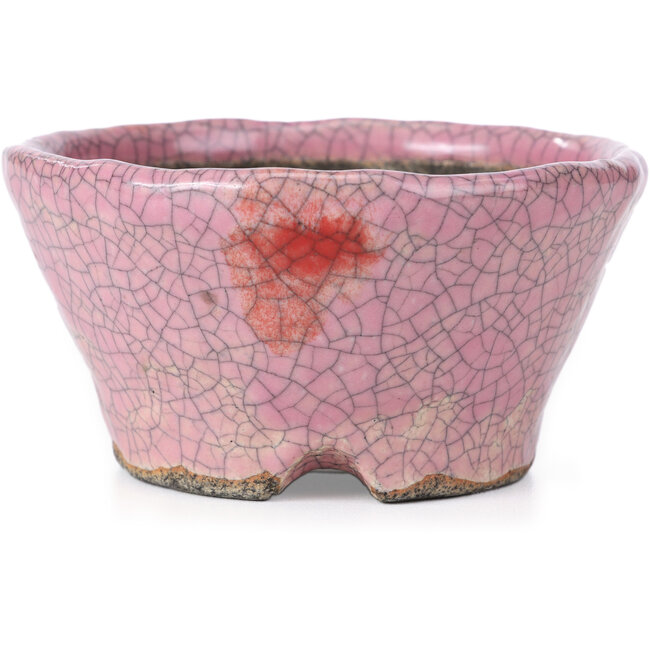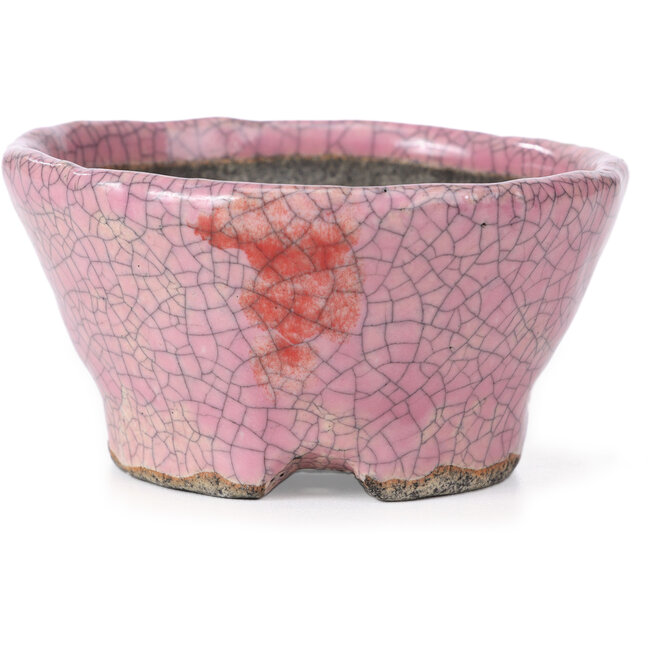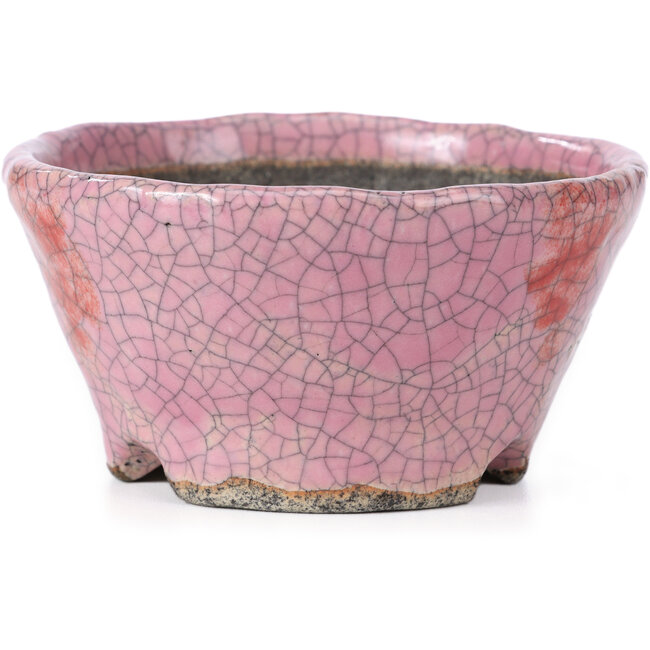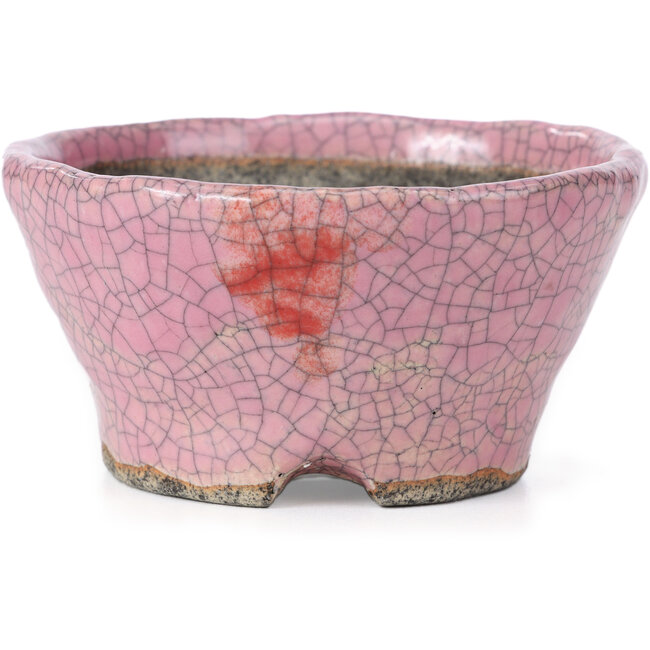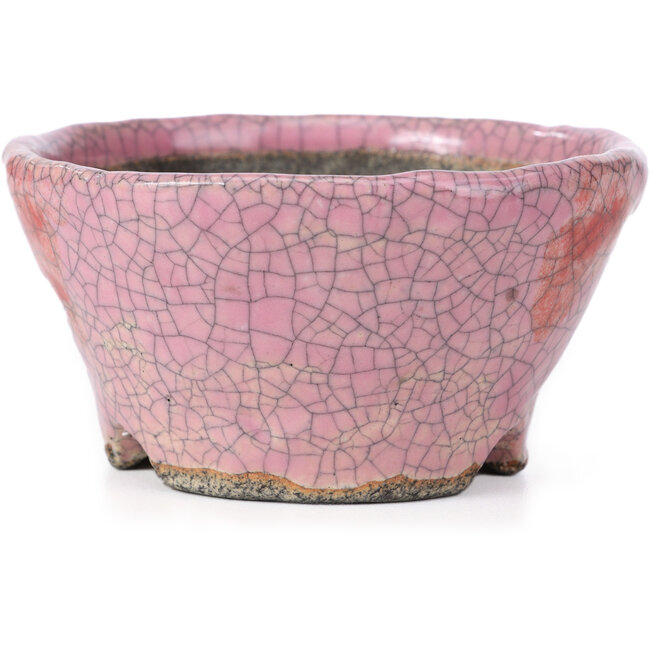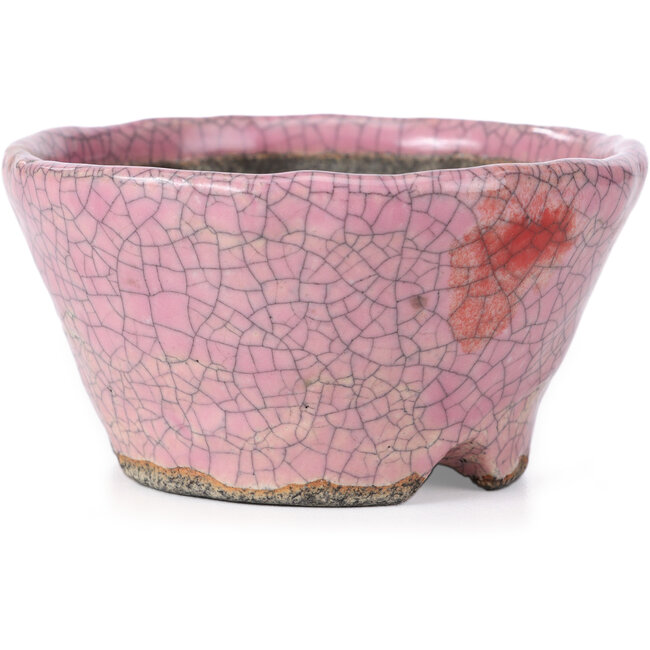
This Bunzan pot is a very clear expression of Ito Kaoru’s Echizen practice: a small vessel where clay, glaze and form are all working for the tree, not for themselves.
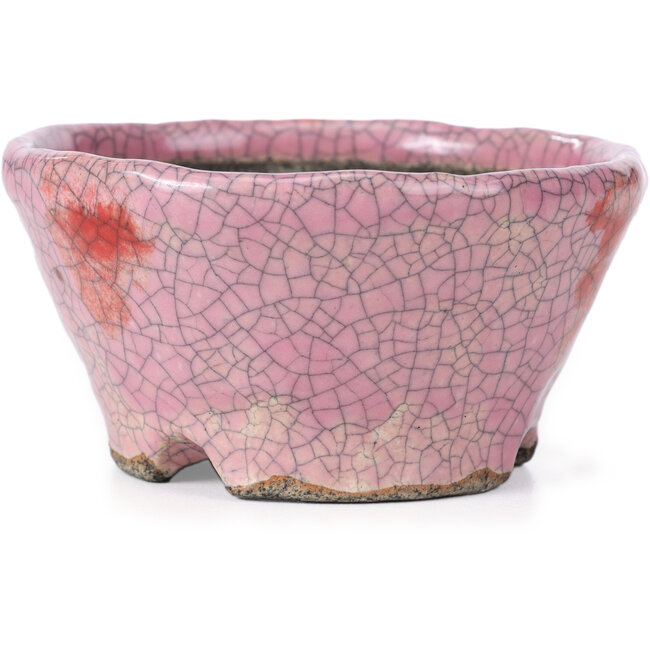
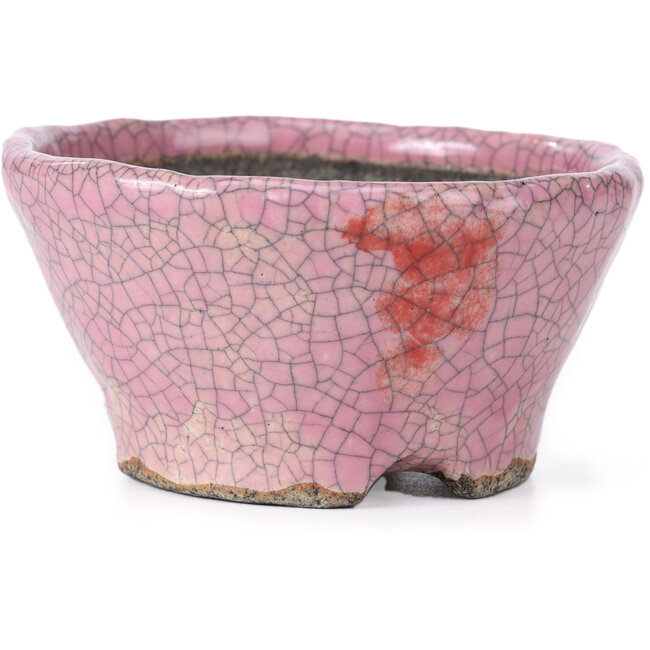
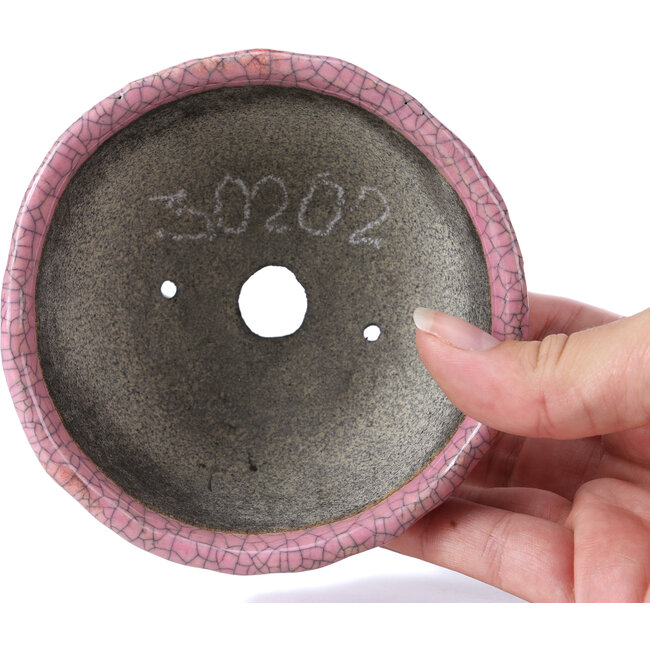
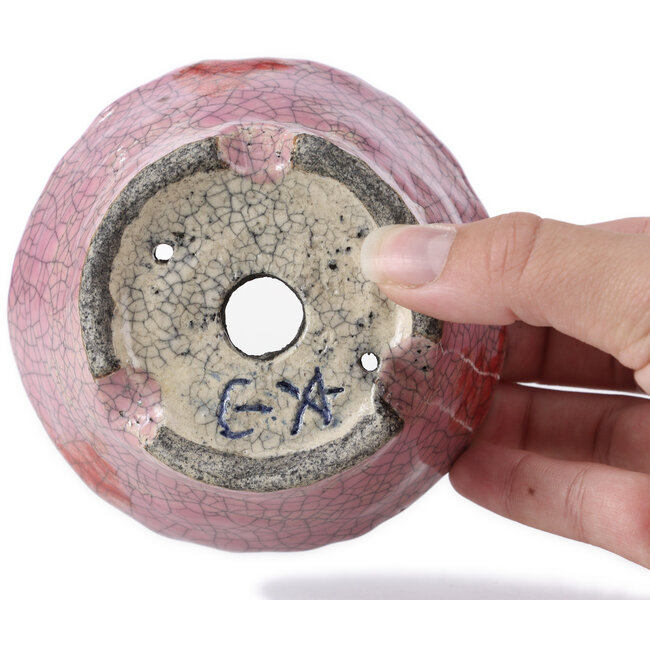
The body is thrown and then finished entirely by hand, without molds. You see this in the gently undulating rim and the three-part foot that is cut out rather than pressed. The clay is Bunzan’s own blend of Echizen and Shigaraki material – a light grey stoneware with fine, dark inclusions. This body fires hard and stable, but stays open enough to breathe, which is exactly what we ask of a serious bonsai container: strength, porosity and long-term resistance to frost and lime. The exposed foot ring underneath shows the character of this clay very well: speckled, almost granitic, with the slightly sandy bite that Echizen is known for.
The pink glaze is where the pot really reveals the hand of a specialist. It is a high-expansion crackle glaze, laid over the stoneware body so that, on cooling, it pulls itself apart into this fine network of crazing. Those lines are not a defect; they are the drawing of the glaze itself, created by carefully calculated tension between glaze and clay. The warm red cloud on the front is a second application, probably with a different iron- or copper-rich wash, which breaks and pools on the underlying pink. Together they suggest the fleeting colour of cherry blossom or the flush on young shoots – a seasonal note that makes a lot of sense in a bonsai context.
Echizen and Shigaraki are two of the old kiln traditions of Japan, historically known for unglazed, flame-marked stoneware. Bunzan stands exactly on that lineage but chooses to work with contemporary colour. The discipline of the old kilns is still there: the honest clay, the functional foot, the perfect drainage hole and wiring holes cut cleanly through. On top of that, Bunzan adds a glaze language that is unmistakably personal. At a time when many pots carrying the Bunzan seal are student work, pieces that can clearly be read as Bunzan’s own hand, like this one, have a special weight in a collection.
For bonsai use, the pot is quietly practical. The walls have enough thickness to buffer temperature without feeling heavy. The three-part foot lifts the tree just off the bench, giving air circulation under the container and a small shadow that visually lightens the composition. The colour will work beautifully with light-flowering species, red or orange berries, or very dark bark; the crackle pattern gives movement without competing with fine ramification.
What makes this pot special, finally, is that nothing about it is accidental. The clay body, the controlled crazing, the asymmetrical red blush, the modest but well-resolved form – all of it comes from a long line of Echizen craft, filtered through Bunzan’s own research and taste. It is a pot that will quietly elevate any high-level shohin or accent tree placed in it, and will continue to reward close viewing long after the first planting.